

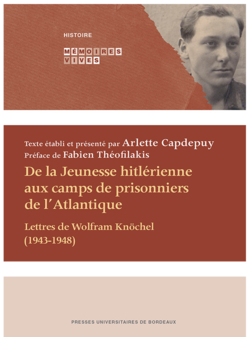
De la Jeunesse hitlérienne aux camps de prisonniers de l’Atlantique. Lettres de Wolfram Knöchel (1943-1948)
Edition: Presse Universitaire Bordeaux
Collectiion: Histoire
ISBN: 979-10-300-0456-4
Veröffentlicht am: 10.10.2020
Weiteres:
Wolfram Knöchel appartient à cette génération d’Allemands porteurs du projet nazi avant de payer le prix fort de son échec. Lycéen enrôlé dans la Wehrmacht en 1943 après avoir été embrigadé dans les Jeunesses hitlériennes, il est fait prisonnier de guerre en mars 1945 par les Américains. Transféré aux Français et affecté dans le Sud-Ouest près du littoral atlantique, il se porte volontaire pour le déminage. Loin des siens restés dans la zone soviétique d’occupation, il doit surmonter ses souffrances physiques et morales. Libéré fin décembre 1947, il sort transformé de sa captivité. C’est ce processus que donnent à lire les quelque 170 lettres écrites à ses parents entre 1943 et 1948, miraculeusement conservées. On y suit ses réflexions, ses inquiétudes, ses doutes, son aveuglement aussi. Ce témoignage exceptionnel reflète la sortie de guerre d’un jeune soldat et inscrit son histoire personnelle dans celle, plus large, des rapports franco-allemands à un moment clef de l’histoire européenne.