
On the concept of genocide
Gerd Hankel (Hamburger Institut für Sozialforschung), Dirk Moses (CUNY), Aurélia Kalisky (CMB)
8.06.2026
18:00 – 20:00
Hybrid : Salle Germaine Tillion, Centre Marc Bloch, Berlin & Online
Inscription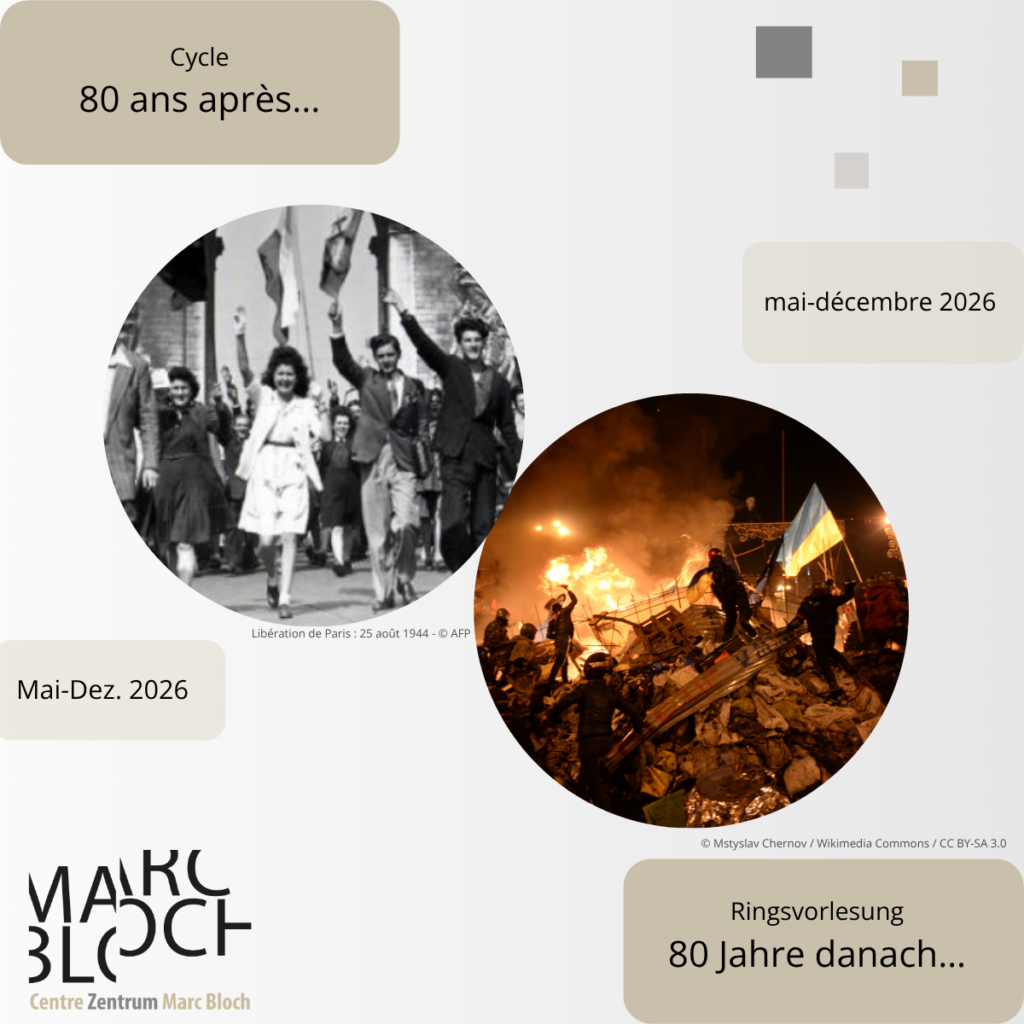
Alors que la notion de génocide ne parvient pas à s’imposer comme catégorie juridique lors du procès de Nuremberg (novembre 1945 – octobre 1946), elle apparaît aujourd’hui comme le « crime des crimes » et connaît une présence médiatique inversement proportionnelle à son usage judiciaire. En réfléchissant à partir des débats contemporains, avec nos trois intervenant·es — un historien, un spécialiste de droit international et de linguistique, ainsi qu’une chercheuse en littérature — aux usages, aux circulations comme aux limites de la notion de « génocide », cette séance interroge la manière dont cet outil conceptuel et juridique, né dans le contexte de la Seconde Guerre mondiale, demeure opérant pour comprendre — voire combattre — les violences extrêmes, 80 ans après la publication de Axis Rule in Occupied Europe. Et si Raphael Lemkin revenait, que dirait-il ?
Intervenant.es :
- Dirk Moses (CUNY)
- Gerd Hankel (Hamburger Institut für Sozialforschung)
- Aurélia Kalisky (CMB)
Modération : Fabien Théofilakis (directeur adjoint, CMB)
La séance se déroulera en anglais et en allemand.
Dans le cadre du cycle « 80 ans après.. »
Partner: